What large-part machining is
Large-part machining consists of milling or turning parts of considerable size and weight, which require machines with long travels, sturdy tables and structures built to support the weight of the part and the cutting forces without losing accuracy.
Advantages of machining large parts with CNC
Using CNC machinery designed for large-format work makes it possible to machine extensive surfaces in a single setup, reducing the number of times heavy, bulky parts have to be repositioned, which saves time and lowers the risk of alignment errors between operations.
Vurcon equipment for large-format machining
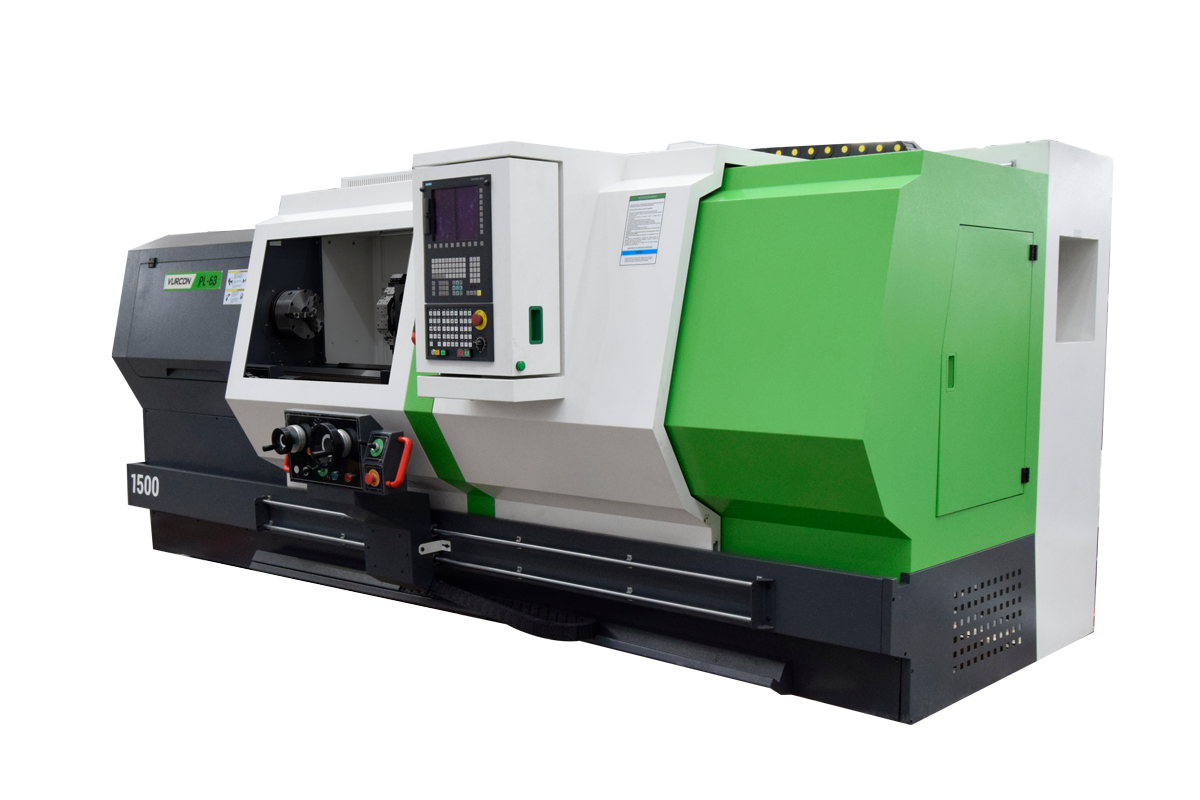
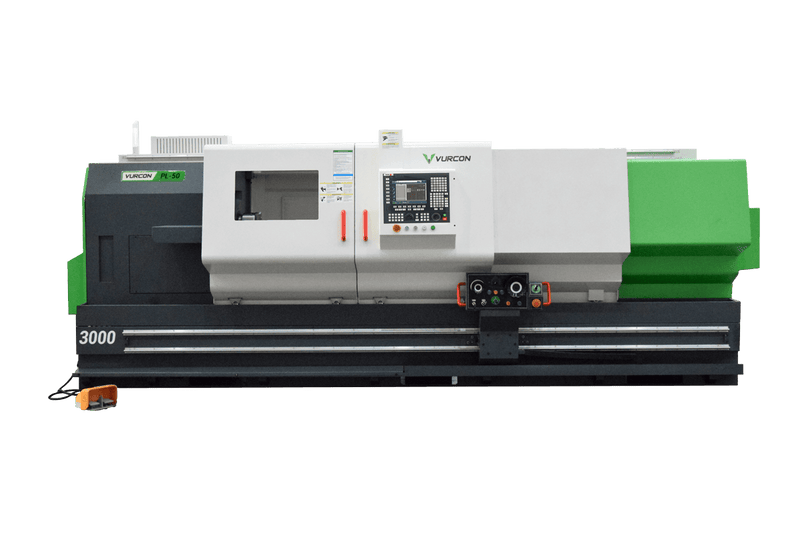
For large parts, Vurcon manufactures double-column machining centers, with X travels of up to 3,100 mm and worktables of up to 1,300×2,500 mm, BT50 taper and tool changers with up to 60 positions. We also offer flat-bed lathes with distances between centers of up to 4,000 mm for long cylindrical parts.
- Double-column centers, DC1020 and DC1330 series
- X travel of up to 3,100 mm in milling
- Distance between centers of up to 4,000 mm in turning
Sectors where large-part machining is applied
Large-format machining is common in the manufacture of large molds and dies, machine beds, metal structures, heavy machinery components and parts for capital goods.
Frequently asked questions about large-part machining
What size of part can I machine with a Vurcon double-column center?
It depends on the model: our double-column centers reach X travels of up to 3,100 mm and tables of up to 1,300×2,500 mm. Ask about the right model for the dimensions of your part.
Is a flat-bed lathe suitable for long parts?
Yes, our range of flat-bed lathes reaches distances between centers of up to 4,000 mm, suitable for shafts and long cylindrical parts.
What is the difference between a vertical center and a double-column center?
A double-column center is structurally designed to handle heavier, larger parts on wider tables, while a vertical center is better suited to small and medium-sized parts.