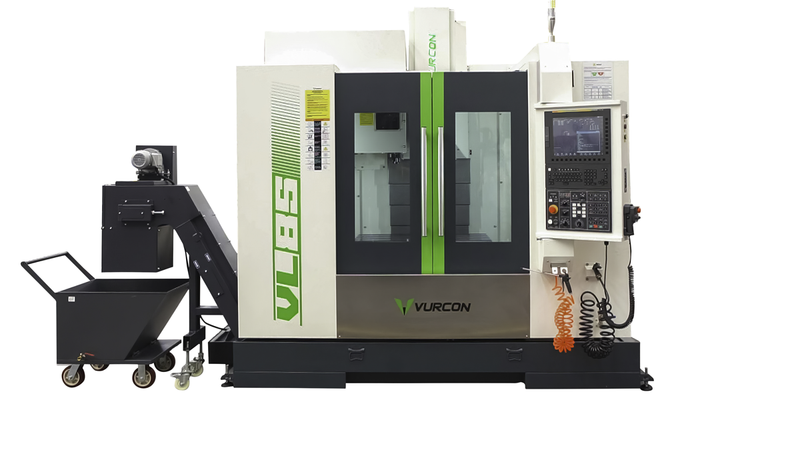
CNC equipment designed for machining stainless steel
Stainless steel is more demanding to machine than aluminum: it generates more heat during cutting, work-hardens if the tool is not working under suitable conditions and requires more spindle power to maintain the recommended cutting speed.
Technical characteristics of stainless steel machining
Machining stainless steel with good results depends on a combination of spindle power, machine rigidity and tools suited to the specific alloy. Our machining centers and CNC lathes offer power ratings of up to 20.5 kW depending on the model, enough to work this type of material within its cutting parameters.
Vurcon machines recommended for this type of material
For prismatic stainless steel parts, we recommend our machining centers with the highest spindle power in the range; for turned parts, our slant-bed lathes of the SBL series, with power ratings of up to 20.5 kW.
- Spindle power of up to 20.5 kW depending on the model
- Fanuc numerical controls for cycle programming
- Automatic tool changers for combined operations
Advantages of CNC machining for stainless steel parts
Working with numerical control makes it possible to keep cutting parameters constant across the whole series of parts, which is especially relevant for a material sensitive to heat generation and tool wear.
Frequently asked questions about CNC stainless steel machining
What power do I need to machine stainless steel?
It depends on the size of the part and the depth of cut. Our range reaches power ratings of up to 20.5 kW depending on the model; check with our technical team about your specific case.
Does stainless steel wear tools faster?
Yes, it is a more demanding material than aluminum for the cutting tool, so the machining parameters should be set carefully.
Which machine do you recommend for turned parts in stainless steel?
Our highest-power slant-bed lathes, within the SBL series. Check with our technical team which model is most suitable for the diameter of your part.