


What is a CNC machining center and how does it work?

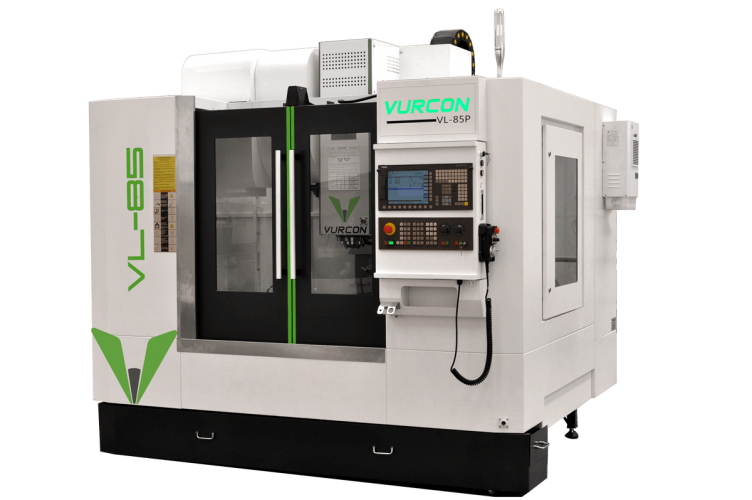
Why use a CNC machining center?
Machining centers came about thanks to the evolution of the milling machine and the need to increase productivity in machine shops and factories. And, of course, to ensure operator safety, since operator involvement with this type of machinery is minimal.
The CNC machining center makes it possible to carry out tasks not only with minimal human intervention but also at high production speeds, which undoubtedly reduces costs considerably. The market offers many types of machining centers grouped by size, functions and levels of automation. You can find machines that reach power ratings of 75 kW and spindle speeds with limits between 4000 and 8000 rpm. And, depending on their size, some can support up to 7,000 kg in weight. This undoubtedly makes them a great choice for machine shops.
In addition, these machines make it possible for one operator to control several CNC machines at the same time, only needing to load or unload the part and rotate it (when necessary, and not all machining centers require it). What is more, it is the machine's program that has full control over the cutting parameters, the required speeds and, of course, the drawings.
Why is it a good idea to include a CNC machining center in a workshop? Because it can do basically any kind of machining work (not just milling), and the operator running it only needs to be proficient in software such as CAD and CAM.
Features of machining centers
The features of a CNC machining center bring nothing but advantages to workshops. This type of machine is fully reconfigurable, that is, all it takes is changing the setup (from the computer) for the machine to perform multiple machining operations on the same part.
These machines also are flexible and versatile thanks to the artificial intelligence they use, which makes production processes faster and more consistent. In terms of consistency, this means that this type of machine is capable of mass or series production and that all the parts machined on it are practically identical. Something that is hard to achieve with manual machines.
But the most important thing is undoubtedly that these machines, as their name indicates, are equipped with CNC numerical control.
CNC numerical control in the machining center

Numerical control makes the machine fully automatic and allows it to operate using programmable alphanumeric codes and characters. CNC is in itself a revolution for the machining industry. This technology, developed in the second half of the twentieth century, works through sophisticated computer programs that have become simpler over the years, enabling more and more factories and workshops to train their operators to use the machines that incorporate them.
To operate a CNC machining center you need CAD and CAM programs. The first of these programs is the one used for the actual design of the part to be machined.
This design is created on a computer using a CAD program. It is saved and opened in another program, CAM; you could say that CAM translates the drawing or design into CNC language. Then the operator only has to instruct the machining center to follow certain instructions to carry out the machining process for the part design. This type of machine can therefore be easily set up to machine a part in a short time, simply by following the instructions of its built-in computer.
Automatic tool changer
You may wonder whether a lathe or milling machine using CNC technology is the same as a machining center, Why are they different if both have numerical control? At first glance they seem the same; however, the main difference between these two machine tools and the CNC machining center is that the latter has an automatic tool changer. This is undoubtedly a great feature and advantage over the other two machines.

A CNC machining center has a system that automatically changes between tools to perform multiple tasks on the same part. There is no need for an operator to stop the machine and go over to change, for example, the milling cutter for a roughing tool. However, for this to happen the operator must program the computer and tell it what the part looks like, what the final design is and which tools it needs to use to achieve that result. Once this has been done, the machine itself will change between the different types of tools it needs to use.